
Key takeaways · Threat signal 9/10 (Critical)
- A massive market correction wiped over $2 trillion from tech valuations this week, fueling widespread fears of an AI bubble burst.
- Nvidia, a key AI stock, has seen a dramatic plunge and is now down for the year, but it also shows signs of resilience and retains strong analyst backing.
- The sell-off is linked to political uncertainty, valuation fears, and new US restrictions on chip sales to China.
- While investors face extreme volatility, developers may see cheaper hardware in the long term but tighter project budgets in the short term.
The Big Picture: A Market in Turmoil
Wall Street is in a state of panic. Over the past few days, a massive sell-off has erased more than $2 trillion in market value from top technology firms, with headlines screaming that the AI bubble has finally popped. Outlets from Seeking Alpha to Tom's Guide are describing a market on the brink, with one analyst calling the situation a collapsing “house of cards.” The fear is palpable and has even spread to adjacent markets, dragging down assets like Bitcoin.
But beneath the chaotic surface, a more complex story is unfolding. While the correction is severe, there are conflicting signals about whether this is a fundamental collapse or a violent, but ultimately healthy, market correction. The sector’s bellwether, Nvidia, finds itself at the epicenter of this storm. The chipmaker’s stock has been hammered, yet it has also shown flickers of resilience and continues to earn bullish recommendations from some analysts. This divergence suggests the final chapter of the AI boom has not yet been written. The question for investors and tech workers alike is whether this is the beginning of the end, or just the end of a very speculative beginning.
What Happened This Week
The week was defined by a brutal, multi-trillion-dollar reality check for the AI sector. The sell-off hit the biggest names in the industry, including Nvidia, Meta, and SpaceX, according to Tom's Guide. The contagion spread quickly, with CryptoSlate reporting that fears of an AI bubble bursting wiped a staggering $2.5 trillion from Wall Street and helped trigger a crash in Bitcoin’s price.
Nvidia, the darling of the AI boom, has been a focal point of the downturn. The company’s stock plunged around 9% in a single day, pushing it into negative territory for the year 2026. Seeking Alpha attributed the drop to a combination of analyst warnings, new US restrictions on chip sales to China, and technical trading factors. This has all contributed to a sense of impending doom, with another Seeking Alpha piece warning of a market correction driven by a potential slowdown in capital expenditure—the money companies spend on big projects—linked to the new political climate after the US midterm elections.
The anxiety isn't just confined to trading desks. According to Reuters, worries about an AI bubble are now emerging among the general public, a sign that the boom’s sustainability is being questioned on Main Street as well as Wall Street.
What Our Data Shows
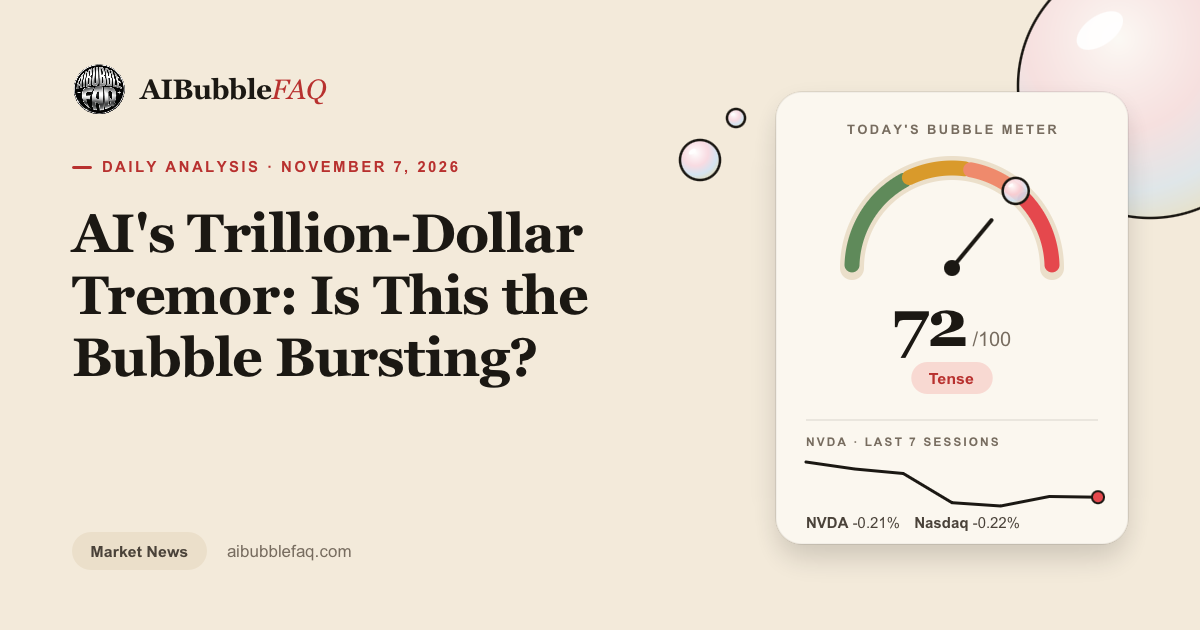
Our own AIBubbleFAQ data paints a clear picture of a market gripped by fear and uncertainty. The Bubble Meter, our proprietary threat index, has spiked to 72/100. This reflects the intense stress and negative sentiment sweeping through the market.
The meter’s recent journey has been a rollercoaster, mirroring the market's volatility. It fell from a high of 86 on November 3rd to just 45 by midday on November 5th, suggesting a brief moment of calm before the storm. It then shot back up to 71 by the end of November 6th before settling at today's elevated level. This whip-saw action is a classic sign of a market in turmoil, struggling to find solid ground as bulls and bears fight for control.
The raw numbers for the Nasdaq and Nvidia tell the same story. The tech-heavy Nasdaq Composite index plunged from over 25,800 on November 4th to a low of around 24,300 on November 6th. Nvidia’s stock price followed a similar, even steeper, trajectory, falling from $202.68 to a low of $181.60 in just two days before staging a minor recovery. This sharp, coordinated drop confirms the severity of the sell-off described in this week's news.
The Bull Case vs. The Bear Case
With so much chaos, it's crucial to look at both sides of the argument honestly.
The Bear Case: The Bubble Has Burst
The bears argue that this is the reckoning everyone has been waiting for. The sheer scale of the losses—over $2 trillion—is evidence that this is not a minor pullback but a fundamental loss of confidence in sky-high AI valuations. An analyst at Seeking Alpha bluntly states the “house of cards is collapsing.” With Nvidia, the sector's leader, now down for the year 2026 (Seeking Alpha), the primary engine of the boom appears to be sputtering. Add in external pressures like political uncertainty and a potential pullback in corporate spending, and you have a recipe for a prolonged downturn.
The Bull Case: A Necessary Correction
The bulls contend that this panic is overblown. They see this as a healthy, if painful, correction that is shaking out speculative excess. They point to moments of strength even amid the chaos. For instance, Investor's Business Daily noted that Nvidia stock actually led a tech rebound during one session, suggesting that buyers are still eager to step in at lower prices. Furthermore, not all analysts are running for the exits. One report from Seeking Alpha published on November 6th argues that Nvidia's competitive moat—its ability to fend off rivals—is actually widening, and maintains a “Buy” rating on the stock. Finally, while bubble fears are emerging, Reuters also reported that overall US consumer sentiment improved in November, suggesting the broader economy may be more resilient than the tech market's panic implies.
What It Means For You
For Investors
If you hold broad market index funds in your 401(k) or brokerage account, the heavy weighting of tech stocks means you have almost certainly felt this downturn. This is a stark reminder that markets go down as well as up, and periods of extreme volatility are part of the long-term investing journey. For those who invest in individual stocks, the current environment is treacherous. The conflicting analyst reports on Nvidia show that even the experts are deeply divided. Making rash decisions based on scary headlines is rarely a winning strategy.
For AI Users and Developers
There are two sides to this coin. On the positive side, a market correction could bring welcome relief from soaring hardware costs. Tom's Guide suggests this downturn could signal a potential end to the “RAM crisis” by 2027, making essential components more accessible. On the other hand, the market panic will likely cause companies to tighten their belts. As Reuters notes, developers may face increased scrutiny on project funding and budgets. While the foundational tech remains strong, securing capital for new AI initiatives may become more challenging in the near term.
What to Watch Next
To gauge where the market is headed, keep an eye on these three signals:
- The Upcoming Jobs Report: Mentioned by Investor's Business Daily as a key event, this economic data will provide insight into the health of the broader economy and could either soothe or amplify Wall Street's fears.
- Corporate Capital Expenditure Guidance: Watch for announcements from major tech firms on their spending plans for 2027. A significant slowdown, as one analyst predicts (Seeking Alpha), would be a strong confirmation of the bear case.
- Nvidia's Next Earnings Call: As the central player in this drama, Nvidia's own financial results and future guidance will be intensely scrutinized. What the company says could set the tone for the entire AI sector for months to come.
Frequently asked questions
Is the AI bubble finally bursting?
It's too early to say for sure. A massive $2 trillion correction has hit the market, leading many to believe the bubble has popped. However, some analysts see it as a necessary shakeout of speculative investors, pointing to signs of underlying strength in key companies.
How does the AI stock crash affect my 401(k)?
If your 401(k) is in a broad market fund like an S&P 500 or total stock market index, you've likely seen its value drop. This is because a few large AI-related tech stocks make up a significant portion of these indexes. This event underscores the importance of a long-term perspective, as corrections are a normal part of investing.
I'm a developer. Will AI hardware get cheaper now?
It's possible in the long run. One report suggests the market downturn could help end the hardware supply crunch and lower prices by 2027. In the short term, however, your company may face tighter budgets and more scrutiny on AI project spending due to the market volatility.
Sources
- AI Bubble Burst: The 'House Of Cards' Is Collapsing — Seeking Alpha
- Did the AI bubble just pop? $2 trillion reality check hits Nvidia, Meta & SpaceX as Wall Street panics, signaling a potential end to RAM crisis in 2027 — Tom's Guide
- Bitcoin crashes below $76,000 as AI bubble fears wipe $2.5 trillion from Wall Street — CryptoSlate
- NVIDIA drops 9%, now down for 2026 — Seeking Alpha
- US consumer sentiment improves in November; worries about AI bubble emerge — Reuters
- Dow Sells Off Ahead Of Jobs Report; Nvidia Stock Leads Tech Rebound| Investor's Business Daily — Investor's Business Daily
- Nvidia: Competitive Moat Widening; Buy — Seeking Alpha
This analysis was researched with AI assistance and reviewed by an editor before publication. Market data comes from AIBubbleFAQ's own trackers — see our methodology. It is not financial advice.