
Key takeaways · Threat signal 10/10 (Critical)
- The scandal around Nvidia's CEO has exposed extreme 'key-person risk' in the AI sector's most important company.
- This company-specific crisis is colliding with macroeconomic pressures like inflation to create a perfect storm for AI stocks.
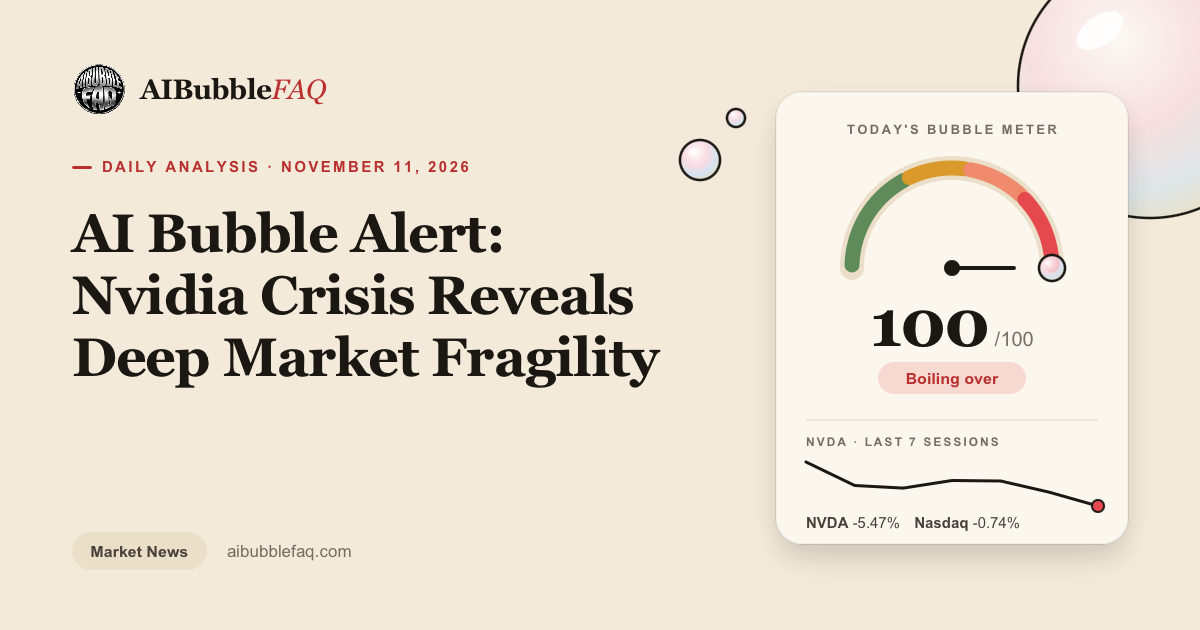
- Our AIBubbleFAQ Threat Index has surged to its maximum level of 100, indicating extreme market stress and bubble risk.
- Investors are now forced to confront the geopolitical and leadership risks that were previously overlooked during the AI rally.
The Big Picture
The uneasy calm in the AI market has shattered. For months, the question has been whether the AI investment boom was a durable revolution or a fragile bubble. This week, we got a glimpse of the answer. A sudden, deeply personal scandal involving Nvidia CEO Jensen Huang has served as a powerful catalyst, exposing the brittle foundations upon which much of the market’s recent gains were built. This isn’t just a corporate PR crisis; it’s a systemic shockwave revealing how much of the AI sector’s massive valuation rests precariously on a handful of companies and, in this case, a single indispensable leader.
The fallout from the Nvidia news is colliding with a grim macroeconomic backdrop. With high inflation persisting and analysts warning that a broader market downturn is poised to resume, the AI sector has lost its insulation from reality. What was once a story of unstoppable technological progress is now a case study in concentrated risk—geopolitical, leadership, and financial. The market is being forced to re-price not just a single stock, but the stability of the entire AI ecosystem.
What Happened Today
The market was rocked by a cascade of reports concerning an internal investigation at Nvidia, the company that designs the chips powering the AI boom. Multiple news outlets, including KABC-TV and NBC News, confirmed the chip giant is probing its CEO, Jensen Huang, over an alleged affair with a suspected Chinese spy. The news sent Nvidia’s stock tumbling, with reports citing drops of 5% to 7% as investor confidence was shaken (New York Post, ABC17News.com).
The financial and strategic implications became clear almost immediately. The stock slide wiped $6.5 billion from Huang’s personal net worth, according to Fortune. More critically, the scandal crystallized the market’s immense reliance on Huang. Analyst Dan Ives, cited by Business Insider, stated that Huang’s departure could shave 30% off Nvidia’s stock value instantly—a stunning quantification of “key-person risk.” This risk is not just about leadership; it's also geopolitical. Another Business Insider report highlighted that the scandal threatens Nvidia’s growth prospects in China, a critical market.
This crisis is unfolding against a hostile economic background. High US inflation data is putting renewed pressure on tech and crypto markets, with Nvidia’s stock drop also linked to fears of interest rate hikes, per Cointelegraph. The timing couldn't be worse, feeding a narrative from bears that the recent market upswing was a “sell the bounce” opportunity before the “AI bubble burst” resumes, as one analyst starkly warned in Seeking Alpha.
What Our Data Shows
Our own metrics paint the most alarming picture yet. The AIBubbleFAQ Threat Index—what we call the Bubble Meter—has surged to 100/100. This is the highest possible reading, indicating maximum stress and a severe risk of a market correction. The meter jumped from a concerning but manageable 51 on November 9 to its current crisis level, a direct reaction to the Nvidia news and the market's inability to absorb the shock.
The raw numbers confirm the damage. Nvidia’s stock (NVDA) has been in a steep decline, falling from $186.64 on November 7 to just $168.89 by November 11. This sharp drop in the sector’s bellwether stock has dragged on the broader market, with the Nasdaq Composite falling from a recent high above 25,700 to near 25,000 in the same period. The data shows a market that was already on shaky ground and is now reacting severely to the removal of its key pillar of support.
The Bull Case vs. The Bear Case
Even in this environment, it's important to weigh both sides.
The bull case: A bull would argue this is a temporary, non-fundamental crisis. The scandal is about a person, not the technology. Nvidia’s formidable competitive advantage—its “AI moat,” as Seeking Alpha describes it—remains intact. The global demand for its AI chips isn't going to disappear because of a CEO’s personal life. A leadership transition, should it occur, would be messy but ultimately manageable for a company with such a deep bench of talent. For long-term believers in AI, this volatility represents a potential buying opportunity, clearing out speculative froth and allowing for investment at a more reasonable valuation.
The bear case: The bears, who are firmly in control today, see this as the event that proves their point. The AI rally, they argue, was priced for absolute perfection, with no margin for human error or geopolitical friction. This scandal is a multi-faceted disaster. It’s not just personal; as an Investor's Business Daily report on the 'honeypot' scandal notes, it carries immense reputational and security risk. It proves that the entire AI edifice was dangerously dependent on one man (). When combined with punishing macroeconomic headwinds like inflation () and a market already primed for a fall (), this isn't just a dip. It’s the potential start of a major, painful correction for the entire AI sector.
What It Means for You
For Investors
If you hold a 401(k) or own broad market index funds (like those tracking the S&P 500 or Nasdaq), you have significant exposure to this volatility. Companies like Nvidia have grown so large they have an outsized impact on the entire market. A sharp drop in their stock price will pull your portfolio down, at least in the short term. This is a powerful lesson in the risks of market concentration. It’s a time to review your portfolio's tech weighting and assess your comfort with risk, not to make panicked decisions.
For AI Users and Developers
The AI tools you use at work today won't break overnight. However, the stability of the entire ecosystem is now in question. Nvidia produces the vast majority of the advanced chips used for training and running large AI models. Any disruption to its leadership, strategy, or ability to do business in key markets like China () could create long-term uncertainty. This could eventually translate into higher costs for the computing power that developers and companies rely on, potentially slowing the pace of innovation.
What to Watch Next
- The Outcome of Nvidia's Investigation: The company's official findings regarding its CEO will be the single most important catalyst. Any announcement about Huang's future will move the market dramatically ().
- The Next US Inflation Report: As Cointelegraph highlighted, macroeconomic data is critical right now. The next Consumer Price Index (CPI) reading will determine if the Federal Reserve is likely to raise interest rates, which would add even more pressure on tech stocks.
- Statements on Nvidia's China Operations: Watch for any official communications from Nvidia, the US government, or the Chinese government regarding the company's business in China. The scandal puts this key growth market in jeopardy ().
Frequently asked questions
Why did Nvidia stock drop so much recently?
Nvidia's stock fell sharply after news broke that the company is investigating its CEO, Jensen Huang, over an alleged affair with a suspected Chinese spy. This created massive uncertainty about the company's leadership, stability, and potential exposure to geopolitical risks, shaking investor confidence.
Is the AI boom a bubble that's about to pop?
While the underlying AI technology is real, the recent market selloff suggests that stock valuations became dangerously inflated and fragile. The Nvidia crisis acted as a pinprick, revealing how sensitive the market is to leadership and geopolitical risks. Our AIBubbleFAQ Threat Index is now at its maximum level of 100, signaling a very high risk of a major correction.
How does the Nvidia news affect my 401(k)?
Many 401(k)s are invested in index funds that track the S&P 500 or Nasdaq. Because Nvidia is one of the largest companies in these indexes, a significant drop in its stock price directly pulls down the value of the entire fund. This means even diversified investors will likely see a negative impact on their retirement savings in the short term due to this event.
Sources
- Sell The Bounce, AI Bubble Burst To Resume — Seeking Alpha
- Bitcoin Retests $73,500 on High US CPI Inflation, Nvidia Stock Drops 4% — Cointelegraph
- Jensen Huang's Departure Would Shave 30% Off Nvidia Stock, Dan Ives Says — Business Insider
- Nvidia Stock Faces New China Growth Risk From Jensen Huang Scandal — Business Insider
- Nvidia stock falls amid probe into CEO Jensen Huang over alleged affair with Chinese spy — KABC-TV
- Nvidia stock falls amid probe into CEO’s relationship with Chinese spy — NBC News
- Nvidia falls 5% over probe into CEO Jensen Huang's affair with alleged Chinese spy — New York Post
- Nvidia stock falls after probe into CEO’s affair with alleged foreign spy — ABC17News.com
- Nvidia Stock Drops On Spy Scandal, CEO Probe — Investor's Business Daily
- Jensen Huang’s wealth drops $6.5 billion as Nvidia stock slides in the fallout of spy affair scandal — Fortune
- Nvidia Stock’s AI Moat Faces A New Test, And Two Other Top Stocks With Durable Earnings — Seeking Alpha
This analysis was researched with AI assistance and reviewed by an editor before publication. Market data comes from AIBubbleFAQ's own trackers — see our methodology. It is not financial advice.