
Key takeaways · Threat signal 9/10 (Critical)
- Reports of missed AI spending by Alphabet and Microsoft are spooking investors, suggesting the infrastructure boom is slowing.
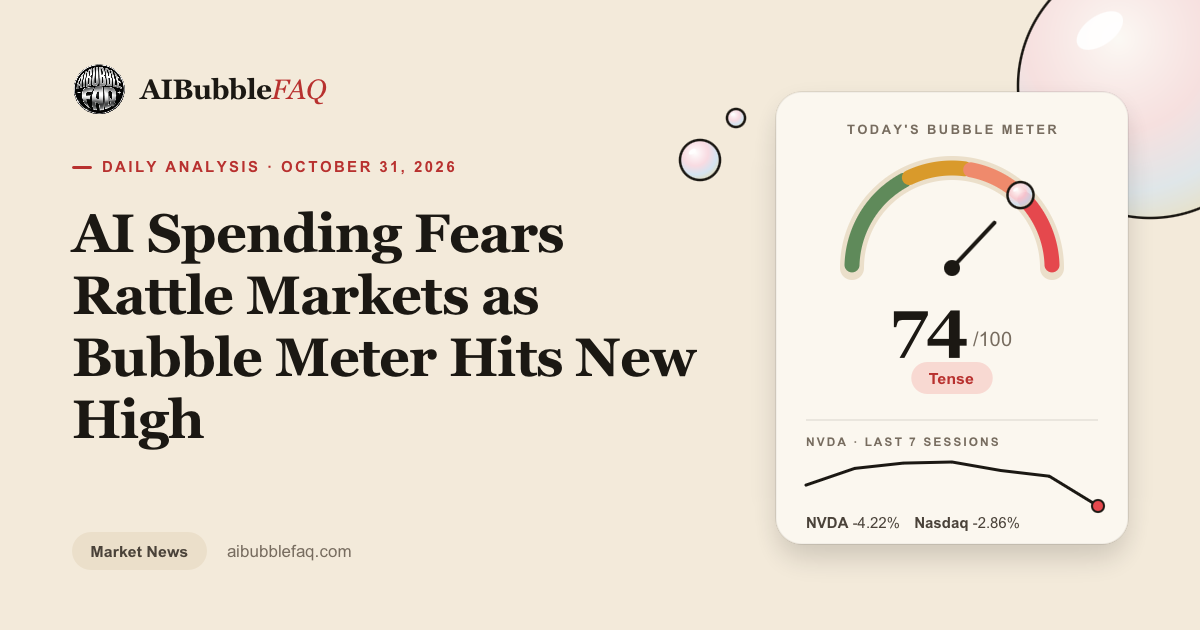
- The Nasdaq and key AI stock Nvidia saw significant drops today as our Bubble Meter surged from 44 to 74/100.
- A major correction in China's AI market, where a key index has fallen 42%, may be a warning sign for US markets.
- Despite the downturn, some companies like Foxconn are doubling down on AI hardware, signaling long-term confidence.
Is This the Correction We've Been Waiting For?
For over a year, the question hanging over the artificial intelligence boom hasn't been if a correction would come, but when. Today, the market gave its loudest answer yet. A potent combination of slowing investment from the very giants building AI's foundations, a steep drop in tech stocks, and echoes of a bubble already bursting in China have pushed our own Bubble Meter to one of its highest-ever readings. The era of unchecked optimism may be over.
The core of today's anxiety stems from a potential crack in the fundamental AI growth story: the massive spending on infrastructure. A report from Seeking Alpha suggests that Big Tech's blank check for AI data centers may be getting smaller, a signal that sent a chill through the market. When the biggest buyers start tapping the brakes, everyone down the supply chain feels the jolt.
While some industry players remain bullish, pointing to new partnerships and long-term demand, the immediate data is undeniable. The market is scared. Today felt like the first chapter in a new, more cautious phase of the AI revolution, where hype must finally answer to profitability.
Cloud Spending Slows, Markets Tumble
The day's most impactful news came from a Seeking Alpha analysis claiming that tech titans Alphabet and Microsoft missed their targets for AI capital expenditure. Capital expenditure, or capex, is the money companies spend on physical assets like the servers and data centers that power AI. For months, this spending has fueled the AI gold rush. The suggestion that it's slowing down implies the "build it and they will come" phase of AI infrastructure may have peaked, triggering what the report calls a potential "infrastructure bubble burst."
This development in the U.S. doesn't exist in a vacuum. A report from Protos provides a stark case study of what a correction looks like, declaring that "China’s $340B AI bubble has popped." The evidence cited is a staggering 42% decline in the country's Star 50 AI index and an 18% drop in the broader CSI 300 tech index. While the Chinese and U.S. markets are different, the dramatic reversal overseas offers a cautionary tale for American investors.
Adding to the bearish sentiment, a Tom's Guide article challenged the dominant cloud-first AI model, questioning OpenAI CEO Sam Altman's vision of centralizing AI processing in data centers. The piece points to an "impending AI bubble burst" and the financial losses of major players like Anthropic as reasons to believe the future may lie in different, perhaps more efficient, AI architectures.
However, not all signals were negative. Bucking the trend, electronics manufacturing giant Foxconn announced a new partnership with OpenAI, as reported by TNW. The company's chairman explicitly rejected AI bubble fears and detailed plans to expand AI server production. This move suggests deep confidence in the long-term hardware demand. Similarly, a separate Seeking Alpha opinion argued that strong underlying demand for AI means the bubble won't burst in 2027, positing that key stocks like Microsoft might even be undervalued.
The Bubble Meter Spikes to 74
Our own market data reflects the sharp turn towards fear. After weeks of relative stability, the AIBubbleFAQ Threat Index—what we call the Bubble Meter—surged from 44/100 to 74/100 in a single day. This is one of the most significant jumps we have ever recorded, indicating a dramatic shift in news sentiment and market volatility.
The stock market tells the same story. The tech-heavy Nasdaq Composite fell sharply, closing at 25,437.00, down from 26,184.72 the previous day. That's a drop of nearly 3%. Nvidia (NVDA), the chipmaker at the heart of the AI boom and a bellwether for the sector, took an even harder hit. Its stock price fell from $213.66 to $204.64, a decline of over 4%. These are not minor fluctuations; they are decisive moves downward that reflect serious investor concern about the immediate future of AI-driven growth.
A Blip or a Burst?
Weighing today's news requires looking at both sides of the coin, even when one side seems much heavier.
The Bear Case
The argument that the bubble is bursting, or at least rapidly deflating, is strong. The biggest companies in the world are reportedly slowing their infrastructure spending, the primary engine of the boom. The Chinese AI market, which was running hot, has already collapsed, providing a potential preview for the U.S.. And there are growing questions about whether the current, extremely expensive cloud-based AI model is even sustainable, especially as major AI labs continue to post heavy losses. In this view, the market is waking up to the reality that exponential hype cannot last forever without a clear path to massive profits.
The Bull Case
The long-term bull case remains intact, even if bruised. The argument is that AI is a foundational technology shift, not a fleeting trend. A market pullback is seen as a healthy, necessary event that shakes out speculators and creates buying opportunities in strong companies. Strategic moves, like Foxconn's partnership with OpenAI to build the next generation of AI hardware, show that smart industrial players are investing for the long haul, not just for the next quarter. This isn't the dot-com bust of 2000, where many companies had no viable products. AI is already integrated into software used by billions. A slowdown in spending could simply be a natural adjustment after a year of frantic, perhaps inefficient, investment.
Your Takeaway for the Week
For Investors
If you're a long-term investor with a diversified 401(k) or index funds, days like today are a test of nerve, not a signal to overhaul your strategy. Tech-heavy indexes like the Nasdaq are inherently volatile. For those with concentrated bets on specific AI stocks, this is a moment to re-evaluate your risk tolerance. The coming months could see the market begin to separate companies with sustainable, AI-driven business models from those that were simply riding the wave of hype.
For AI Users & Professionals
The AI tools you use at work are not going to disappear overnight. The underlying technology is powerful and here to stay. However, a market correction will increase pressure on AI companies to turn a profit. This could mean the end of generous free tiers and a rise in subscription costs for the most capable models. For developers and tech workers, the debate highlighted by Tom's Guide between massive cloud models and more efficient on-device AI will intensify. A slowdown in data center construction could accelerate innovation in smaller, more localized AI.
Three Signals to Watch
- Big Tech Earnings Calls: As other major tech companies report their quarterly earnings, listen for any mention of AI capital expenditure. Will they confirm the spending slowdown seen at Alphabet and Microsoft, or will they announce plans to accelerate investment? Their guidance will be a critical market signal.
- AI Server Supply Chain: Watch for announcements from hardware makers like Foxconn, SK hynix, and others. Do they confirm robust orders for AI servers and memory chips, or do they revise their forecasts downward in response to cooling demand from cloud providers?
- Enterprise Adoption Metrics: Look for reports on how many businesses are moving from free AI trials to paid enterprise contracts. Real, widespread corporate spending is essential to justify the massive valuations in the AI sector and prove the demand is sustainable.
Frequently asked questions
Is the AI bubble finally bursting?
It is too early to say definitively, but October 30th saw major warning signs. Reports of big tech cutting spending on AI infrastructure, combined with a sharp market drop, have significantly increased the risk of a major correction. Today's events suggest the period of unconditional optimism is over.
Should I sell my tech stocks like Nvidia?
We do not provide financial advice. However, days like today are a reminder of the volatility in high-growth sectors. Long-term investors in diversified funds often ride out these downturns, while those with heavy exposure to specific AI stocks may be re-evaluating their risk tolerance.
Will the AI tools I use at work go away?
It's highly unlikely that established AI tools will disappear. The underlying technology is valuable and deeply integrated into many products. A market correction would, however, pressure AI companies to focus on profitability, which might mean fewer free services and higher prices for premium tools.
Sources
- AI Bubble Burst: Confirmed By Alphabet, Caterpillar, ServiceNow, And Amazon — Seeking Alpha
- Sam Altman says your laptop RAM is a 'terrible allocation of scarce resources': Why I think the AI bubble is about to prove him wrong — Tom's Guide
- China’s $340B AI bubble has popped - and the charts prove it — Protos
- Foxconn chairman says new OpenAI tie-up is in the works, Reuters reports — TNW
- The AI Bubble Won't Burst In 2027 — Seeking Alpha
This analysis was researched with AI assistance and reviewed by an editor before publication. Market data comes from AIBubbleFAQ's own trackers — see our methodology. It is not financial advice.